
When Work Is Interrupted: Finding Purpose Beyond a Title
A candid reflection from a former senior leader at CDC on navigating professional transition, the tension between loyalty and integrity, and the values that remain when institutions and roles change

We continue our 📢 Voices From the Field series with a contribution from former Chief Medical Officer and Deputy Director for Program and Science at CDC, Dr. Deb Houry.
What happens when the work that defines you is suddenly interrupted? In this thoughtful and deeply personal essay, Dr. Houry reflects on leadership, identity, and integrity during a period of profound upheaval, exploring how purpose endures beyond a title. At a time when too many public health professionals are discovering that losing a job or leaving an institution is about far more than a paycheck, I believe that her reflections on grief, values, and finding a path forward will resonate with many readers of this newsletter.
If you’d like to follow Dr. Houry’s lead and share your own perspective on these complicated times for public health, I’d love to hear from you.
Like all the articles in The Public Health Workforce is Not OK newsletter, this is not intended to be a monologue. This newsletter welcomes discussion, dialogue, disagreement, and amplification.
Please comment, like, share, recommend, subscribe, or get in touch!
When Work Is Interrupted: Finding Purpose Beyond a Title - Voices #35
By Dr. Deb Houry, MD MPH
For much of my career, I served as an emergency physician and later in senior leadership roles at the Centers for Disease Control and Prevention (CDC). Like many people in public health and health care, I did not view my work as just a job; it was a mission intertwined with my identity. My colleagues became friends, and the work shaped my days, my priorities, and my sense of purpose.
Leading Through Uncertainty
During my final year at CDC in 2025, I was the only career leader remaining in the Office of the Director. From that vantage point, I watched colleagues lose jobs they had devoted their careers to, and expertise built over decades at the agency disappear overnight. Programs that had taken years to build were eliminated or dramatically reduced, with consequences ranging from an inability to respond to community lead concerns to research animals being euthanized. I found myself navigating situations I never imagined, including when recommendations associated with CDC did not reflect the agency’s scientific process and approach.
Professionally, these developments were difficult to handle. Personally, these actions were heartbreaking and traumatic to process. The role of leadership involves helping teams navigate change, but I was not only leading through uncertainty; I was experiencing it alongside my staff. I shared their concerns, frustrations, and, at times, their grief, while still needing to show up each day as their leader. With each challenge, I asked myself whether I could still make a difference, support my team, and help advance the agency’s mission. What made the experience especially challenging was not a single decision or one day, but the accumulation of moments over time that forced me to reconsider where I could best serve while remaining aligned with my values.
When Loyalty and Integrity Collide
Looking back, I realized one of the toughest aspects of that year was the tension between loyalty and integrity. I felt deeply loyal to CDC, to the people who worked there, and to protecting the health of individuals and communities. That commitment is the reason I stayed as long as I did. I wanted to support my colleagues, preserve important work where I could, and continue serving. But loyalty and integrity are not always the same thing, and there are moments when leaders must ask whether staying allows them to continue advancing the mission or whether their ability to do so has fundamentally changed. When I ultimately left my job at CDC, I was not walking away from the mission; I was trying to remain faithful to it while preserving the values that guided my career—integrity, service, and scientific rigor—and my identity.
I learned through my prior emergency room experiences as a physician that loss comes in many forms and that after the initial shock, the question becomes what happens next. When everything feels urgent, you shift into “triage” mode, identifying quickly what matters most. During this period of uncertainty, I found myself applying that same principle to my own life.
Rediscovering Purpose Beyond a Title
My title was gone, but my values, relationships, skills, and sense of purpose remained. What took longer to understand was that I was grieving more than a job; I had lost part of my identity or so I thought. What surprised me most was realizing that my sense of purpose had never been tied to a particular title or institution. It was rooted in the values and relationships that shaped my career. Conversations with former colleagues, mentors, and new partners helped me see that while the setting had changed, the work that mattered to me had not. In many ways, those relationships provided continuity during a period when much else felt uncertain. Since leaving, I have gone on to work with public health leaders, health systems, boards, technology companies, and universities where the mission is similar: improving health, strengthening trust, and helping people navigate uncertainty. I have found that this work is similarly guided by the commitment that brought me into medicine and public health in the first place.
I am still figuring out what comes next. For someone used to moving quickly from one challenge or opportunity to another, this “gray” can be an uncomfortable space. Rather than rushing toward the next title or plan, I have given myself permission to pause and reflect on a different set of questions: What work brings the greatest sense of purpose? Where can I have the most impact? What brings me joy? I do not have all the answers yet, and I am okay with that. Growth happens in the space between chapters, when we give ourselves time to reflect, reconnect with our values, and rediscover what matters most.
Not everyone reading this is focused on the next chapter. Some are still processing the loss of a position, a team, a program, or a future they planned for. Recovery from professional disruption is a uniquely individual experience and it follows no timetable, but purpose and intention can travel with you.
The values that guided me as an emergency physician, public health leader, and mentor continue to guide me today. And when uncertainty makes it difficult to see the path ahead, integrity can serve as a compass until the next chapter comes into view.
This article was originally written for the blog of AcademyHealth and is shared here by kind permission of the author.
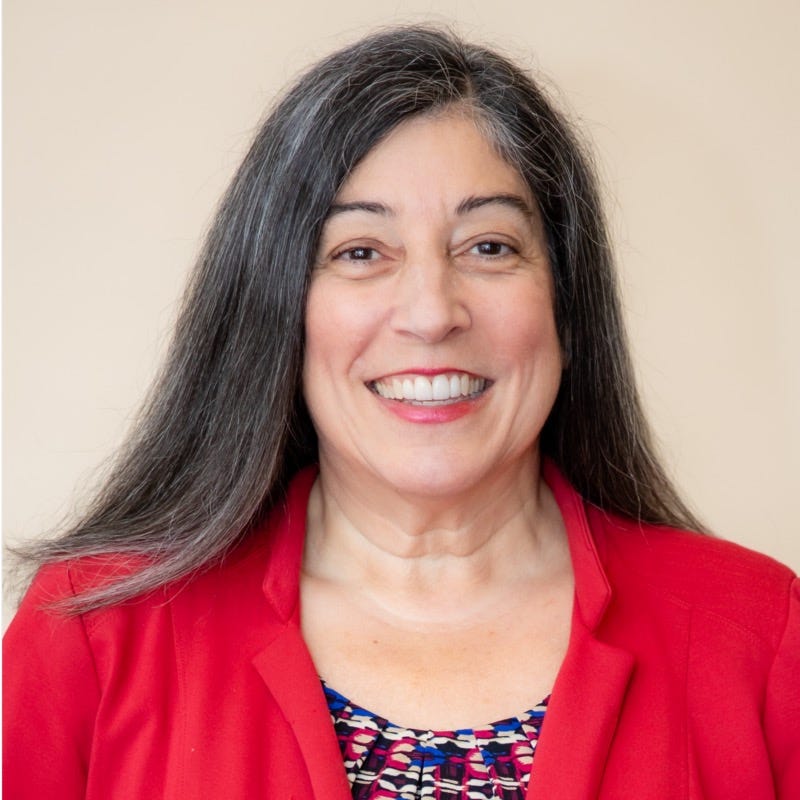
Dr. Deb Houry is an emergency physician, public health leader, and nationally recognized expert with nearly three decades of experience spanning federal government, health systems, and academia. She previously served as Chief Medical Officer and Deputy Director for Program and Science at the Centers for Disease Control and Prevention (CDC), where she led major public health initiatives through four Presidential administrations and helped guide the agency through some of the nation’s most complex public health emergencies. During the transition into the second Trump administration, she served as CDC’s senior-most career leader and scientist before publicly resigning in 2025. She has testified before Congress and spoken candidly about the challenges of maintaining scientific independence and protecting the public’s health during a period of deep political polarization. Dr. Houry is now a Senior Fellow at the Yale School of Public Health, an Adjunct Professor at Emory University, and an independent consultant. Her recent interview on CBS News’ Face the Nation reflects the thoughtful, courageous leadership that has defined her career and continues to inspired the public health community.
🆕 Action steps
✨Starting in honour of MLK Day, all newsletter authors are invited to share action steps. We compile all suggestions into the Resistance Action page that we have been building since we started. ✨
If you would like to support the public health workforce, including federal workers and former feds, consider taking the following steps:
Share a note of thanks with public health heroes across the nation to recognise their work and commitment.
Get involved in collective advocacy and activism to defend and advance the scientific ecosystem of the United States by supporting Stand Up for Science.
Support NIH staff and alums through the 27 UNIHted network.
Support former CDC colleagues through the CDC Mutual Aid Network.
Stay informed using resources for former and current federal workers from the Partnership for Public Service
Invest in the next generation of public health professionals by participating in APHA Mentor Match as a mentor or mentee.
Advocate to your legislators for a strong public health workforce, including reinstating RIFed positions, lifting hiring freezes, protecting the training pipeline, and restoring the authority and independence that agencies need to do their work. Using this tool connects you straight to your legislators.
Call for sustained investment in health and science by urging elected officials to prioritize public health, research, and prevention.
Vote for leaders who support public health and demonstrate respect for science, evidence, and bipartisan solutions.
Challenge misinformation about federal workers by speaking up when harmful or inaccurate narratives arise and reinforcing the value of public service. Name the reality that federal public health workers are highly skilled, mission-driven professionals who chose public service to improve lives and consistently deliver work that benefits the public.
If you would like to share your perspective on public health right now in this Newsletter written TO and FOR and BY and ABOUT the public health workforce, we are currently running three series:
📢 Voices from the Field: Meeting This Moment in Public Health
Opinion pieces grounded in lived experience💌 Love Letters to Public Health
Poetry, prose, visual art, or other creative formats🚪 Resignation Letters
Real or imagined correspondence documenting what is happening to our people and our institutions in real time
Please get in touch if you would like to submit a draft to any of these series. I will work closely with you to prepare it for publication. Review previous instalments for examples. I will offer you my personal promise of confidentiality if requested.
Lots more information on how to share your story is available here:
I close by emphasising what I said in a previous newsletter:
“At this time of uncertainty for the public health workforce, let’s remember our commitment to science and evidence and data. We know that validating emotions and baggage has a place too, but we need to be able to identify them and distinguish opinion from fact.
Let’s recommit to kindness and mutual support for the public health workforce and beyond. If leaders are trying to sow divisions among us, the best we can do is to respond with empathy, and by strengthening, connecting, and lifting up one another.
Right now, the best I can offer my fellow public health professionals is a place* to gather and reflect and share and vent and organize and ask questions and offer support to one another. We’re going to need that now more than ever.”
*This is a plug for the Public Health Connections Lounge on LinkedIn, where we seek to build community and conversation among public health professionals. Join us.
If you are new around here, Welcome to The Public Health Workforce is Not OK! In this newsletter, I share frank insights and start conversations about the experiences of building a public health career. You can get to know me here and here. Please subscribe, review the action steps and the archive, and join the conversations in the Lounge. I am committed to keeping this newsletter free for job seekers (at least, for as long as I still have a job).
"Public health" is public enemy #1.
https://vinuarumugham.substack.com/p/four-major-crimes-enabled-the-covid
You people think you're somebody you're not. Health is not public, it is individual. CDC should not exist.
https://romanbystrianyk.substack.com/p/the-swine-flu-fiasco-of-1976?utm_source=share&utm_medium=android&r=17lbua